Advertisements

Breathing Exercises for Procrastination: How I Finally Tricked My Brain Into Getting Stuff Done
Here’s a wild stat that stopped me in my tracks — roughly 20% of adults are chronic procrastinators, according to research highlighted by the American Psychological Association. I was absolutely one of them. And honestly, the thing that finally helped me break the cycle wasn’t a fancy planner or a productivity app — it was something as simple as breathing.
Look, I know that sounds ridiculous. I thought so too when a colleague first mentioned it during a particularly stressful grading week. But breathing exercises for procrastination have been a total game-changer for me, and I want to share what I’ve learned so maybe you can skip the years of frustrated floundering I went through.
Why We Procrastinate in the First Place
So here’s the thing most people get wrong — procrastination isn’t about being lazy. It’s actually an emotional regulation problem. Our brains perceive a task as threatening or uncomfortable, and the stress response kicks in, flooding us with cortisol and making us want to flee to Instagram or Netflix instead.
I remember sitting at my desk one Saturday, needing to write report cards for 28 students. My chest was tight, my thoughts were scattered, and suddenly reorganizing my entire spice cabinet felt incredibly urgent. That’s the anxiety talking, not laziness.
This is exactly where breathwork comes in. When you activate your parasympathetic nervous system through controlled breathing, you basically tell your brain, “Hey, we’re safe, calm down.” And once that fight-or-flight response settles, starting the task feels way less impossible.
The 4-7-8 Technique: My Personal Go-To
The 4-7-8 breathing method, developed by Dr. Andrew Weil, was the first technique that actually worked for me. You inhale through your nose for 4 seconds, hold for 7 seconds, and exhale slowly through your mouth for 8 seconds. That’s it.
I do three rounds of this before tackling anything I’ve been avoiding. The first time I tried it, I was shocked at how quickly my resistance melted. It was like someone turned down the volume on my anxiety by about 60%.
Advertisements
Box Breathing for When You’re Really Stuck
Some days the procrastination is fierce, you know? For those moments, I turn to box breathing — also called square breathing. It’s a technique that Navy SEALs actually use to stay calm under pressure, which honestly makes me feel a little badass doing it before answering emails.
The pattern is simple: inhale for 4 counts, hold for 4 counts, exhale for 4 counts, hold for 4 counts. Repeat four or five times. I once used this right before a parent-teacher conference I’d been dreading and putting off scheduling for weeks. Worked like a charm.
The Two-Minute Breathing Reset
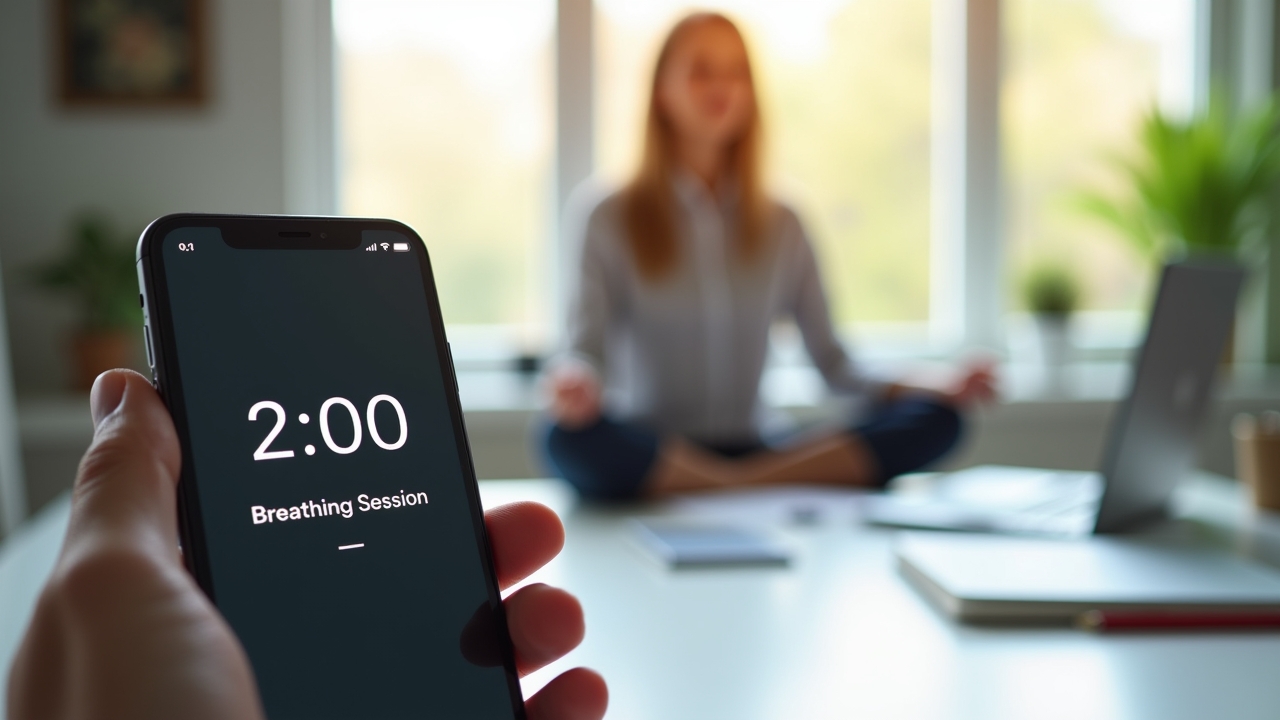
Okay, here’s my secret weapon. I call it the two-minute reset, though I definitely didn’t invent it. You set a timer for two minutes and just focus on deep diaphragmatic breathing — belly expanding on the inhale, contracting on the exhale.
The rule I made for myself is that after the two minutes, I only have to work on the dreaded task for five minutes. Just five! But here’s the sneaky part — once you’ve calmed your nervous system and started the task, you almost always keep going. Momentum is a beautiful thing.
Quick Tips to Make Breathing Exercises Actually Stick
- Pair your breathing practice with a specific trigger, like opening your laptop or sitting at your desk
- Don’t judge yourself if your mind wanders — it will, and that’s totally normal
- Start with just one technique and master it before adding others
- Try doing your breathwork with your eyes closed in a quiet spot if possible
- Be patient — it took me about two weeks before it started feeling natural
Your Breath Is Already With You — Use It
The beautiful thing about using breathing exercises to beat procrastination is that you literally carry the tool with you everywhere. No subscription required, no equipment needed. Just you and your lungs doing what they already know how to do — only with a bit more intention.
Experiment with the techniques I’ve shared and find what clicks for your brain. And please, if you have any respiratory conditions, chat with your doctor before diving into intense breathwork practices. If you’re hungry for more techniques and inspiration, head over to One Big Breath — we’ve got tons of posts that’ll help you breathe better and live calmer. Your future, non-procrastinating self will thank you!