Advertisements
Breathing for Better Posture: How I Fixed My Slouch Without a Single Back Brace
Here’s a stat that honestly blew my mind — roughly 1.71 billion people worldwide suffer from musculoskeletal conditions, and poor posture is a massive contributor. I was one of them. For years, I sat hunched over my desk like a question mark, wondering why my shoulders ached and my lower back was basically screaming at me every evening.
Then I stumbled onto something that changed everything, and it wasn’t a fancy ergonomic chair or some expensive chiropractor visit. It was breathing. Yep, just breathing — but doing it the right way.
Why Your Breath and Your Posture Are Basically Best Friends
So here’s the thing most people don’t realize. Your diaphragm — that dome-shaped muscle sitting below your lungs — is not just a breathing muscle. It’s actually a core stabilizer that plays a huge role in spinal alignment.
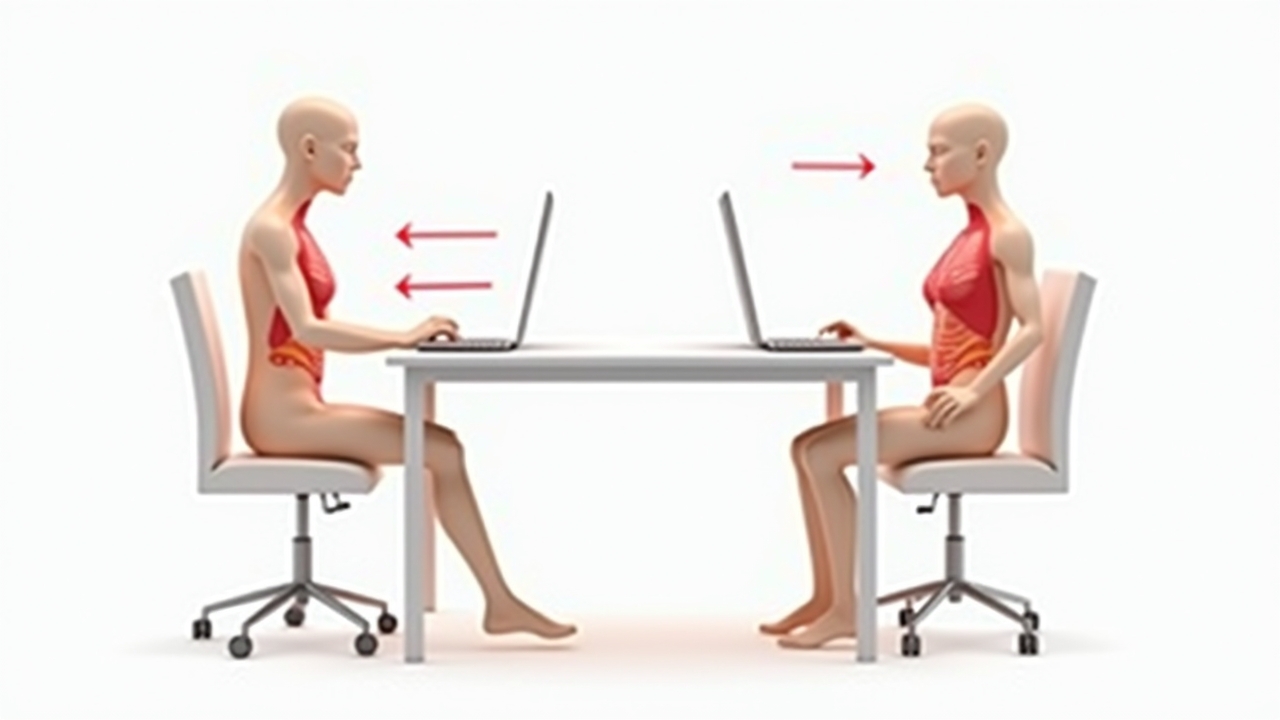
When you breathe shallowly into your chest (which, let’s be honest, most of us do all day), your accessory muscles in the neck and shoulders pick up the slack. Over time, this creates tension, forward head posture, and that dreaded rounded-shoulder look. I didn’t learn this in a textbook — I learned it after a physical therapist watched me breathe and said, “Well, there’s your problem.”
Diaphragmatic breathing, on the other hand, activates your deep core muscles and naturally encourages your spine to stack properly. It’s like your body was designed to hold itself up, but we’ve been accidentally overriding the system with shallow chest breathing for years.
The Breathing Mistake I Made for a Decade
I used to suck in my stomach all day. Like, constantly. I thought it looked better, and someone once told me it “engaged my core.” Turns out, that was terrible advice.
Holding your belly in actually restricts your diaphragm from descending fully. Your breath gets trapped in your upper chest, your neck muscles tighten up, and your posture slowly collapses forward. I was literally creating the problem I was trying to fix — how’s that for ironic?
Advertisements
Once I stopped bracing my abs like I was about to get punched and started letting my belly expand on the inhale, everything shifted. My shoulders dropped. My thoracic spine felt like it opened up. It was honestly kind of wild.
A Simple Breathing Exercise That Actually Works
Alright, here’s the practical stuff. This is the exercise that made the biggest difference for me, and it’s been backed by research from places like the National Institutes of Health. You don’t need any equipment.
- Lie on your back with your knees bent and feet flat on the floor.
- Place one hand on your chest and one on your belly, just below your ribcage.
- Inhale slowly through your nose for about 4 seconds, directing the air into your belly. The hand on your stomach should rise while the chest hand stays pretty still.
- Exhale gently through pursed lips for 6–8 seconds, feeling your belly fall.
- Repeat for 5 minutes, ideally twice a day.
After about two weeks of doing this consistently, I noticed I was sitting taller without even thinking about it. My body just… remembered how to hold itself up. The Cleveland Clinic has a great guide on diaphragmatic breathing technique if you want more detail.
Taking It Beyond the Floor
Once you’ve got the hang of belly breathing lying down, try it seated at your desk. This is where the real postural magic happens. I started doing three conscious breaths every time I caught myself slouching, and it became like a little reset button for my spine.
You can also practice during walks. Inhale for four steps, exhale for six. It sounds silly, but the rhythmic breathing pattern keeps your core engaged and your ribcage stacked over your pelvis. My lower back pain dropped significantly within a month — no joke.
Your Posture Is Waiting for You to Just… Breathe
Look, I’m not saying breathing exercises will replace professional care if you’ve got a serious spinal condition. Always check with a healthcare provider if you’re dealing with chronic pain. But for everyday slouching and desk-related tightness, this stuff is genuinely powerful.
Start small. Be patient with yourself. And remember — your body already knows how to do this, you just gotta remind it. If you’re curious about more breath-based techniques for health and wellness, head over to One Big Breath and explore some of our other posts. Your spine will thank you!