Advertisements
Nose Breathing vs Mouth Breathing: Why I Spent 30 Years Breathing the Wrong Way
Here’s a stat that honestly blew my mind — roughly 60% of adults are chronic mouth breathers, and most of them have no idea it’s messing with their health. I was one of them! For nearly three decades, I walked around with my mouth hanging open like a fish out of water, completely unaware that something as simple as how I breathed could affect my sleep, my energy, and even the shape of my face.
So let’s talk about nose breathing vs mouth breathing, because trust me — this stuff matters way more than you’d think.
What Actually Happens When You Breathe Through Your Nose
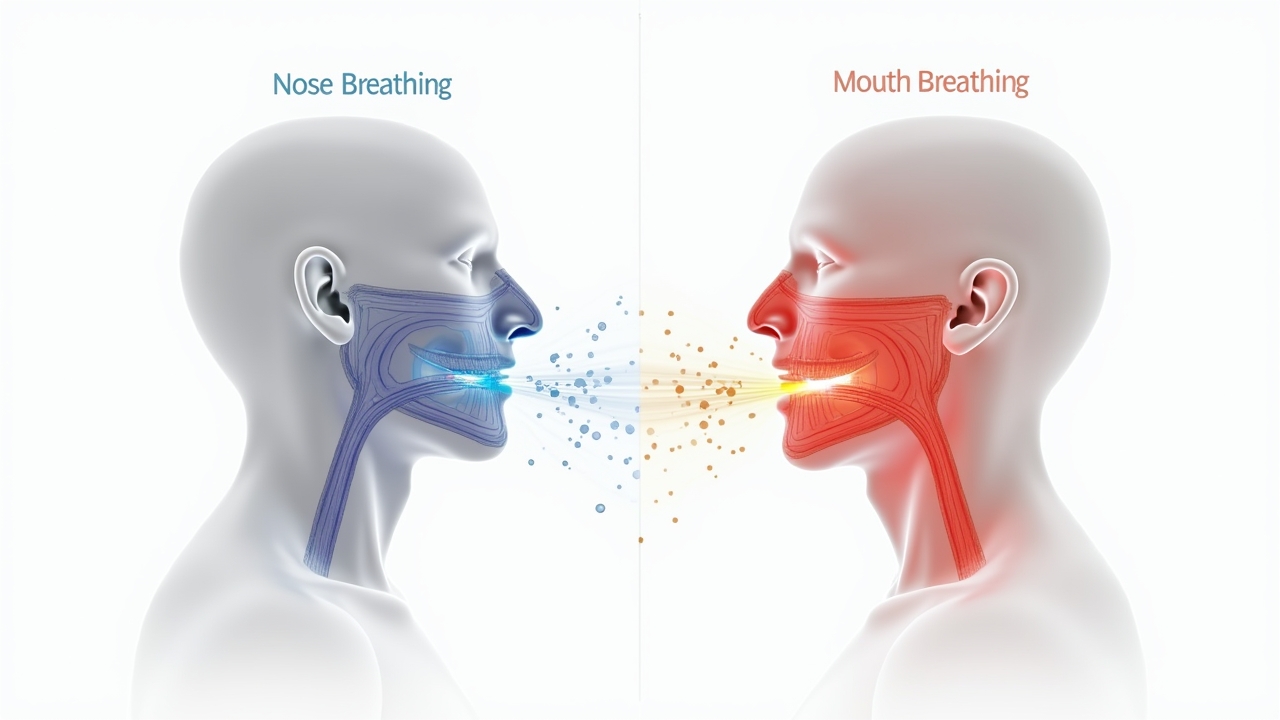
Your nose is basically a built-in air filtration system. When air passes through your nasal passages, it gets warmed, humidified, and filtered before it ever hits your lungs. Tiny hairs and mucus membranes trap dust, allergens, and bacteria — pretty neat, right?
But here’s the part that really got me excited. Nasal breathing triggers the production of nitric oxide, a molecule that helps dilate your blood vessels and improve oxygen absorption. That means more oxygen actually gets delivered to your cells. I noticed this firsthand when I started consciously breathing through my nose during my morning walks — my energy levels were noticeably better after just a couple weeks.
Why Mouth Breathing Is Kinda Terrible (Sorry)
Look, I’m not trying to shame anyone here. I was a mouth breather for years, especially at night. But the consequences are real and they sneak up on you.
Chronic mouth breathing can lead to dry mouth, which creates a breeding ground for bacteria and increases your risk of cavities and gum disease. It also messes with your sleep quality something fierce. I used to wake up with a throat so dry it felt like I’d swallowed sandpaper, and I just thought that was normal.
There’s also the facial development angle, which is kind of wild. Research from the National Library of Medicine shows that long-term mouth breathing — especially in kids — can actually change facial structure, leading to a longer face, recessed chin, and crowded teeth. I wish someone had told my parents about this when I was seven.
Advertisements
Common Signs You Might Be a Mouth Breather
- Waking up with a dry mouth or sore throat
- Snoring or sleep apnea symptoms
- Chronic bad breath even with good oral hygiene
- Feeling fatigued despite getting enough hours of sleep
- Brain fog during the day
How I Made the Switch (And You Can Too)
Okay, so switching from mouth breathing to nasal breathing isn’t exactly a flip-the-switch situation. It took me a solid month of conscious effort before it started feeling natural. Here’s what actually worked for me.
First, I started with daytime awareness. Every time I caught myself breathing through my mouth — at my desk, watching TV, whatever — I’d gently close my mouth and redirect. It was annoying at first, not gonna lie. But it became second nature eventually.
Then I tackled nighttime breathing, which was the harder part. I tried mouth taping — yes, literally putting a small strip of surgical tape over my lips before bed. It sounds crazy, I know. My wife thought I’d lost it. But it was honestly a game-changer for my sleep quality and I stopped snoring almost immediately.
Quick Tips to Build the Habit
- Practice diaphragmatic breathing exercises for 5 minutes daily
- Keep your tongue resting on the roof of your mouth — this naturally encourages nose breathing
- Clear nasal congestion with saline rinses before bed
- Consider mouth taping with gentle, skin-safe tape (start with just naps if you’re nervous)
- Stay hydrated throughout the day to keep nasal passages moist
Every Breath Is a Choice Worth Making
The way you breathe shapes your sleep, your focus, your energy — honestly, your whole quality of life. I spent way too long ignoring something this fundamental, and I don’t want that for you. Of course, if you have a deviated septum or chronic nasal obstruction, definitely talk to a doctor before trying any of these techniques.
Start small. Pay attention. And if you want to dive deeper into breathwork, wellness, and all things respiratory health, swing by One Big Breath — we’ve got tons of posts that’ll help you breathe better, one inhale at a time.